The 6th Forum on Academic Development and Engineering Practice in Intelligent Construction was recently held at the Daxing campus of Beijing University of Civil Engineering and Architecture (BUCEA). The forum was initiated by the Engineering Technology Research Center for Integrated Construction in New-Type Building Industrialization under the Ministry of Housing and Urban-Rural Development, and jointly organized by the center and the China Association of Construction Education (CACE). This year's event was hosted by NCUT, BUCEA, and CACE's University-Industry Cooperation Committee. Under the theme "Intelligent Construction Driving High-Quality Urban Development," discussions focused on the construction industry's industrialization, digitalization, and green transformation, and on the development of better homes, residential compounds, communities, and urban districts. More than 200 experts and scholars from 86 Chinese universities, research institutes, and industry enterprises attended, alongside faculty members and over 30 graduate students from NCUT.
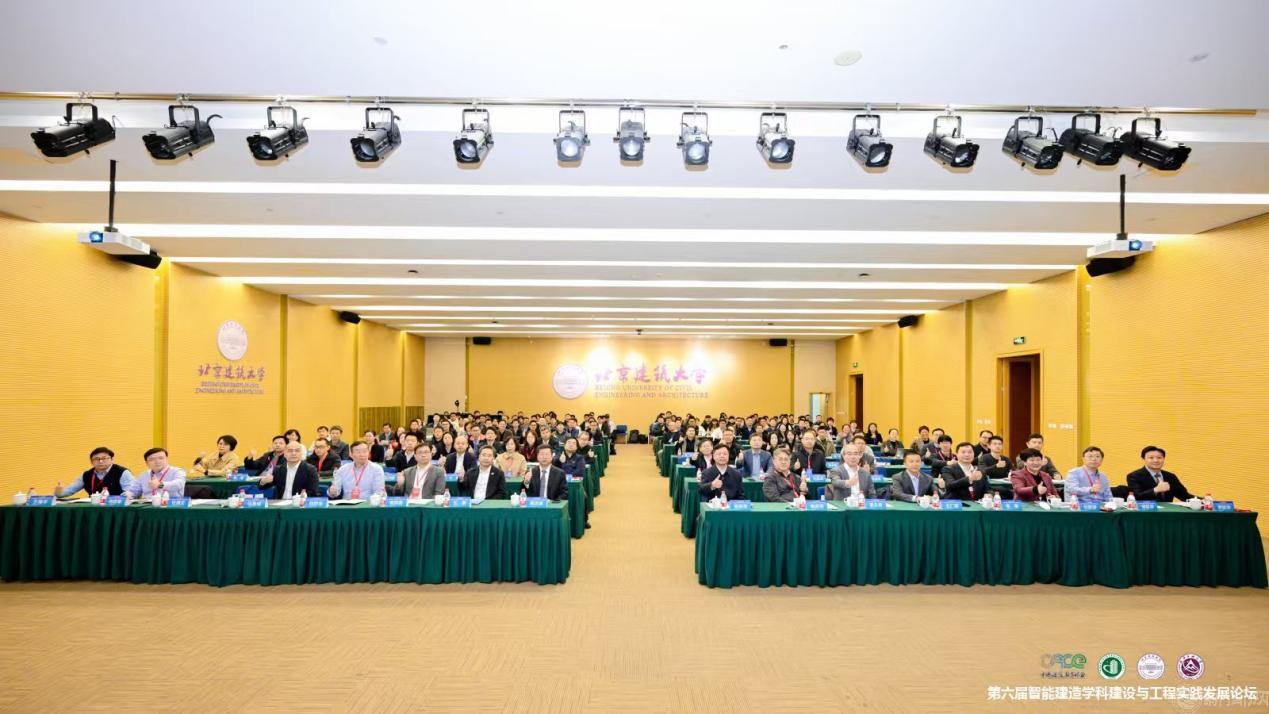
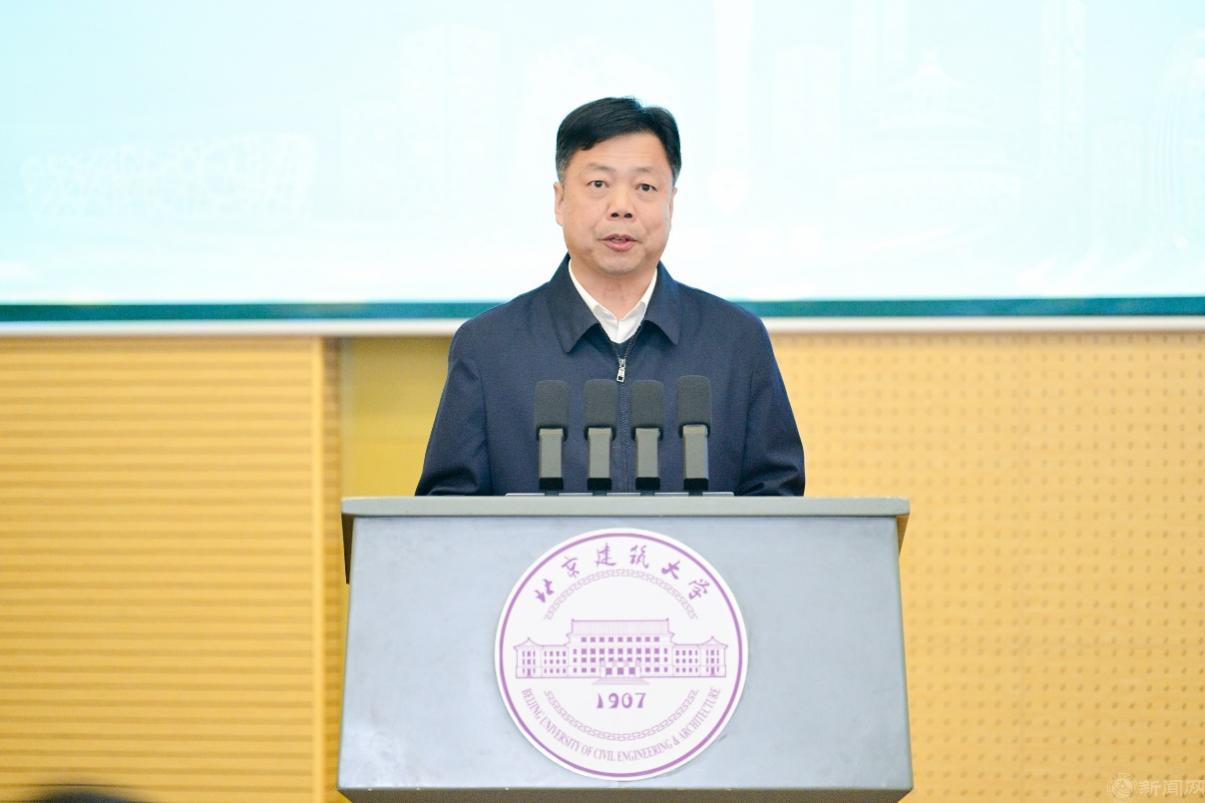
Opening addresses were delivered by Guo Hongtao, Chair of CACE's Board of Supervisors; Zhang Qihong, Secretary of the University Party Committee at NCUT; and Wang Pan, Secretary of the University Party Committee at BUCEA. Zhang said intelligent construction was essential both to developing better homes, residential compounds, communities, and urban districts and to improving urban safety and resilience. He said NCUT would build on its 80th anniversary to deepen cooperation with peer universities and experts, pursue joint work on urban safety governance and the green transition in construction, explore approaches to educating intelligent construction professionals, and produce more results that can be put into practice and adopted more widely.
The forum featured 7 keynote presentations and 41 presentations in parallel sessions. Professor Ji Yingbo, Dean of NCUT's School of Civil Engineering, was among the chairs of the main forum's keynote sessions. The keynote speakers were Li Jiulin, Chief Engineer of Beijing Urban Construction Group and one of China's inaugural National Outstanding Engineers; Han Qinghua, Deputy Secretary of the University Party Committee at Tianjin University and a recipient of the National Science Fund for Distinguished Young Scholars; Liu Yisheng, Chair of the Academic Committee for Economics and Management at Beijing Jiaotong University; Wang Guangbin, Director of Tongji University's Institute for Innovation and Development of the Construction Industry; Fan Zesen, Deputy General Manager of China Construction Eighth Engineering Division Corp., Ltd.; Ma Encheng, Chairman of Beijing Glory PKPM Technology Co., Ltd.; and Yi Tinghua, Vice President of BUCEA and a recipient of the National Science Fund for Distinguished Young Scholars. Their reports covered modular intelligent construction for large public buildings, intelligent monitoring and visual simulation, the digital and intelligent transformation of the construction industry, the integration of engineering design software with artificial intelligence, and predictive maintenance for long-span bridges. The speakers shared the latest research and practical engineering outcomes.
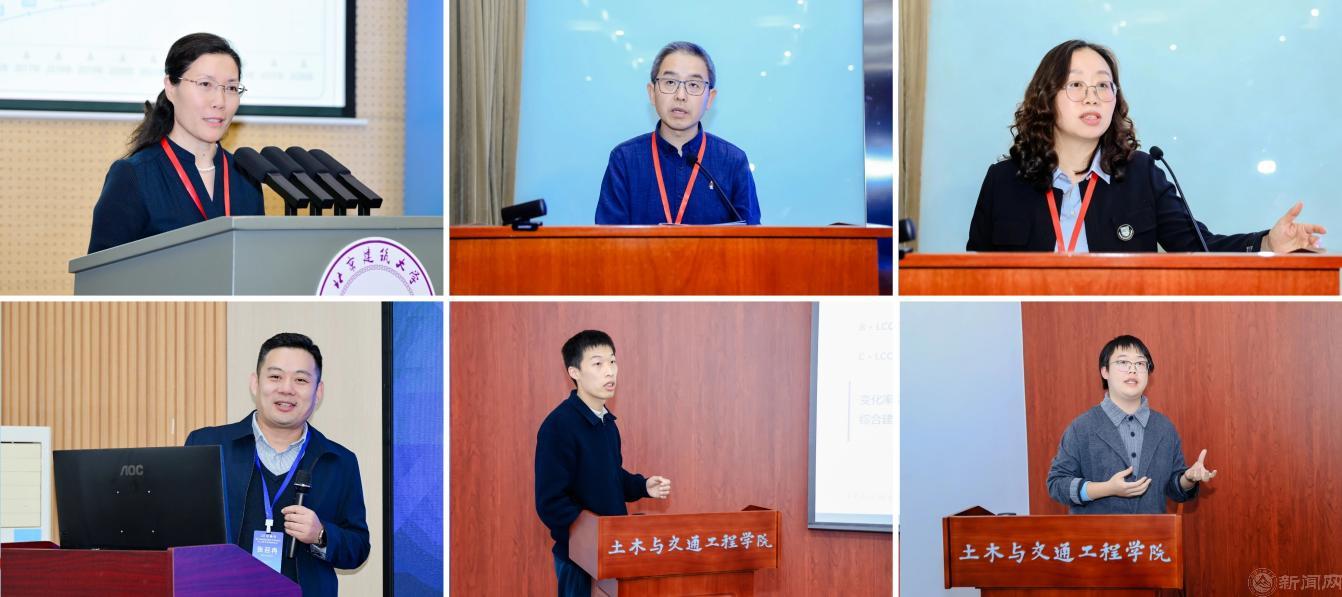
On the afternoon of November 7, 4 parallel sessions were held on intelligent construction and urban safety; intelligent 'new civil engineering' education and the development of civil engineering and related disciplines and programs in the Beijing-Tianjin-Hebei region; innovation in engineering management and the 3rd Beijing-Tianjin-Hebei forum on engineering management disciplines and programs; and exchanges among young faculty and graduate students in intelligent construction. Discussions addressed human-machine collaboration in construction, urban infrastructure resilience, industrialized construction and smart inspection equipment, sustainability of low-carbon systems, age-friendly environments and smart health and wellness, repair materials based on solid waste, interdisciplinary education in civil engineering and related fields, teaching case development for Master of Engineering Management (MEM) programs, human factors in intelligent construction, tunnel digital twins, the seismic performance of prefabricated structures, and intelligent identification of structural cracks. Faculty and students from NCUT's School of Civil Engineering took part throughout the forum, presented their research in the parallel sessions, and exchanged findings with other universities and industry representatives, discussing academic development and education in intelligent construction.
The forum provided a platform for academic development, education, and engineering practice in intelligent construction. It supported efforts to advance the construction industry's industrialization, digitalization, and green transformation, develop new quality productive forces, and promote high-quality urban development. As a host institution, NCUT participated throughout the forum's preparations and organization. Building on the event, the University will deepen partnerships with peer universities and industry, explore ways to educate intelligent construction professionals, and contribute to the high-quality development of the construction industry.
